Xc45
Overview
The X-Yachts Xc 45 is the Danish builder's first dedicated bluewater cruiser, introduced in 2008 and awarded European Yacht of the Year 2009 in the Luxury Cruiser category. Designed by Niels Jeppesen, the Xc 45 was conceived to carry X-Yachts' established racing DNA into the world of serious offshore passage-making. The 'Xc' designation — standing for X-Cruising — signals a purpose-built hull with deeper sections, greater displacement, and more tankage than the brand's performance racing range.
At 45'6" LOA and displacing just over 13,000 kg, the Xc 45 sits in the middle of the bluewater production market. It proved popular enough to spawn a Next Generation update that shed 225 kg through refined joinery and construction techniques, weight which was then added to the keel for improved righting moment. The model was recognized as a top full-size cruiser under 50 feet by Cruising World's independent judging panel in 2016.
Design and Construction
The Xc 45 hull is built with foam-cored sandwich construction using fiberglass with vinylester and polyester resins and E-glass reinforcement. Its most distinctive structural feature is a massive integral stainless-steel internal frame that runs longitudinally and ties together the keel, mast step, and chainplate loads into a single load path — a hallmark of the entire X-Yachts range built at the Haderslev, Denmark yard.
The keel is a cast-iron fin with an L-shaped lead bulb, glued and bolted to the foil, available in two draft options. All tanks are positioned centrally below the cabin sole for optimal weight distribution and to minimize pitching. The Next Generation version replaced the original stainless-steel mainsheet arch with a carbon fiber unit, saving top-weight while increasing headroom below.
Under Sail
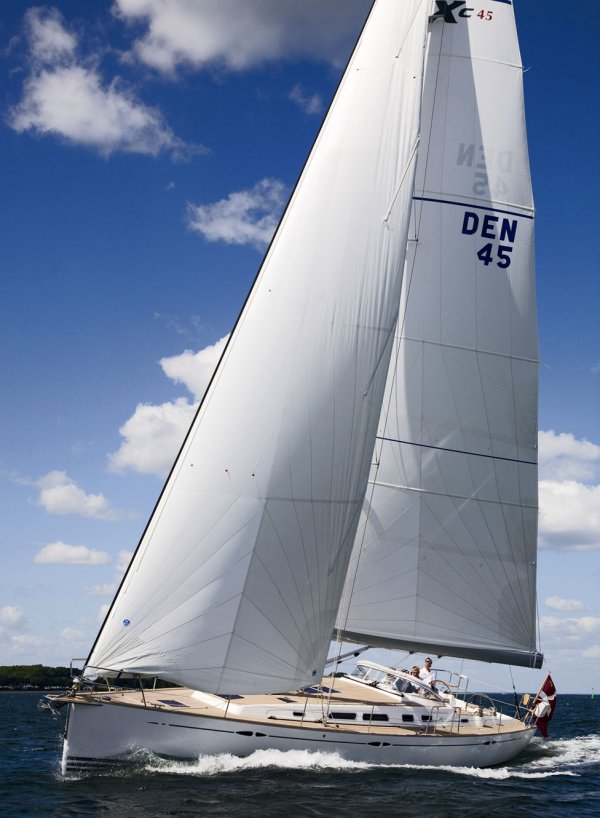
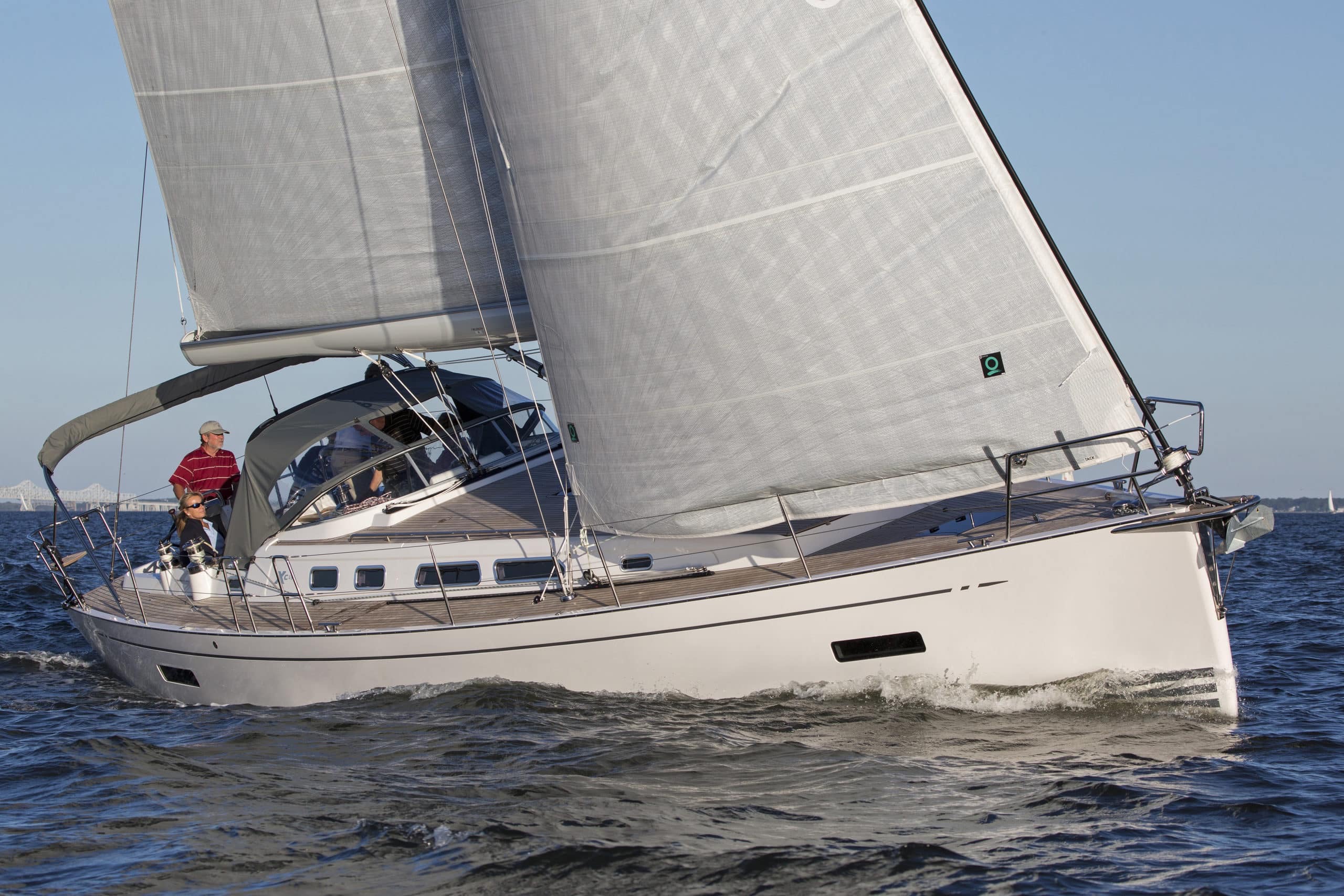
The Xc 45 was praised by reviewers for its balanced, confident helming, tacking through roughly 60 degrees without significant speed loss. During sea trials in light air, testers recorded boat speeds closely matching true wind speed while reaching, with a high of 8.6 knots at 60 degrees apparent wind angle — impressive for a nearly 30,000 lb cruiser. The helm loads remained light and one-finger manageable throughout.
The upwind sail area of 1,363 ft² is distributed between a large overlapping genoa and a mainsail, with an option for an inner forestay to set a more conservative balanced sail plan in stronger winds. The hull's deeper V-sections forward dampen hobby-horsing and slamming in a chop, giving the boat a smooth, sea-kindly motion that reviewers consistently highlighted as a strength on extended passages.
Specifications
| LOA | 45'6" (13.86 m) |
|---|---|
| LWL | 41'11" (12.76 m) |
| Beam | 14'2" (4.32 m) |
| Draft | 5'11" / 7'2" (1.80 m / 2.20 m) |
| Displacement | 29,145 lb (13,220 kg) |
| Ballast | 13,151 lb (5,965 kg) |
| Sail Area (upwind) | 1,363 ft² (126.6 m²) |
| Mainsail | 660 ft² (61.3 m²) |
| Genoa | 703 ft² (65.3 m²) |
| Engine | Yanmar 80 hp diesel |
| Fuel Capacity | 116 gal (440 L) |
| Water Capacity | 162 gal (615 L) |
| Designer | Niels Jeppesen / X-Yachts Design Group |
| Builder | X-Yachts (Denmark) |
| Years Built | 2008–present |
| Rig | Sloop |
| Keel | Fin keel |
Accommodation
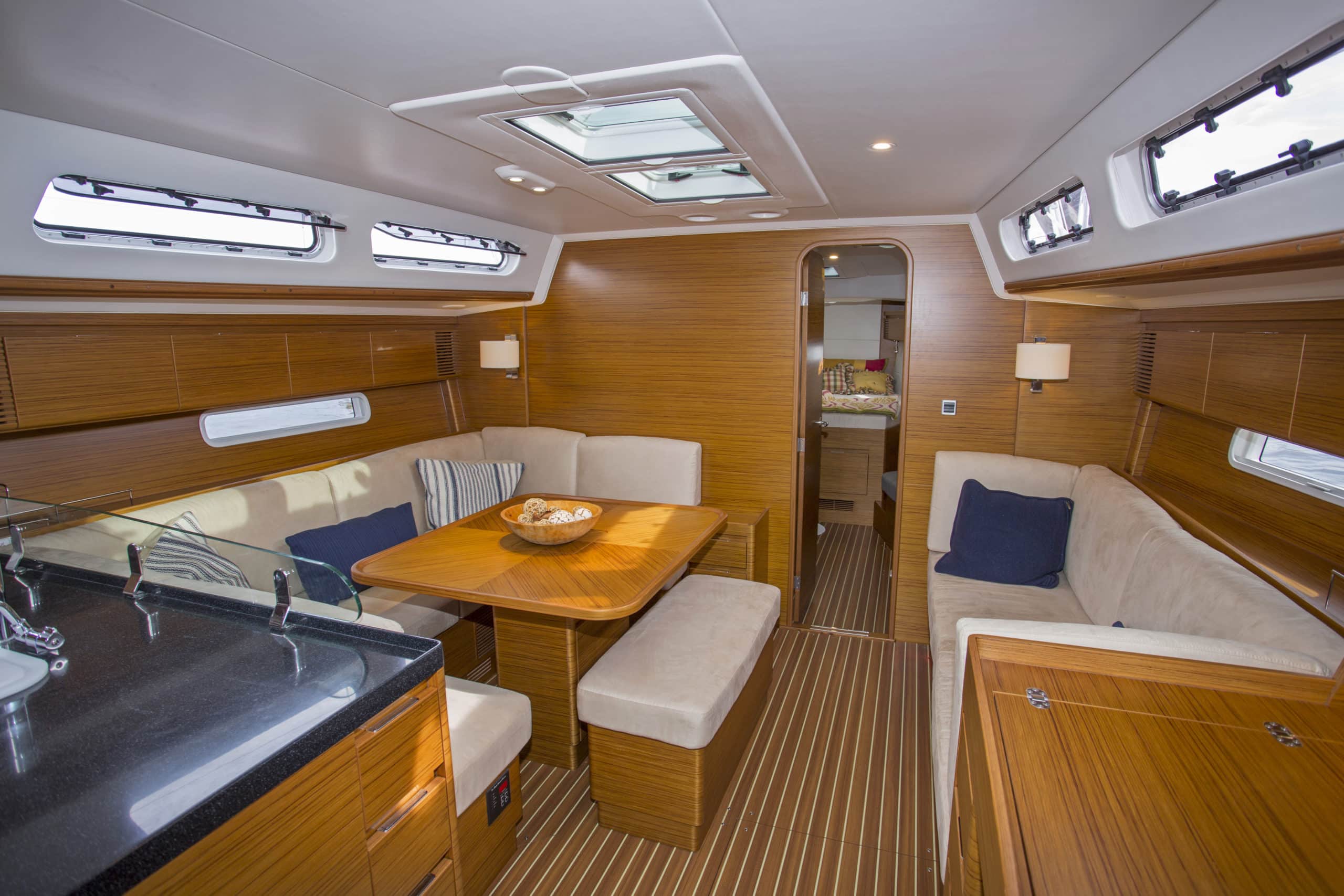
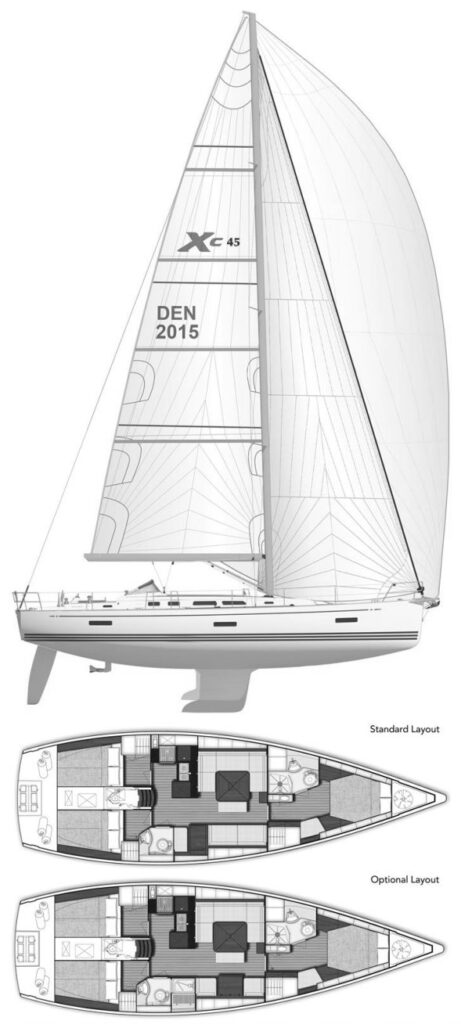
The standard three-cabin layout places the owner's suite forward with a centerline queen berth, a private head, and a separate shower. Two aft double cabins share a second head to starboard. The main saloon features a U-shaped settee and dining table to port, with an opposing settee and an L-shaped galley positioned behind it. A dedicated navigation station sits aft of the second head.
The Next Generation update brought larger hull windows that substantially improve natural light below decks. Galley stowage was reorganized with centrally relocated bins and soft-closing drawers on hidden runners throughout the interior. The liferaft was moved to a dedicated compartment below the cockpit sole, freeing up a larger bathing platform at the stern — a significant quality-of-life improvement for shorthanded crews in warm anchorages.
Links, References and Further Reading
Image Gallery