Swan 51
Overview
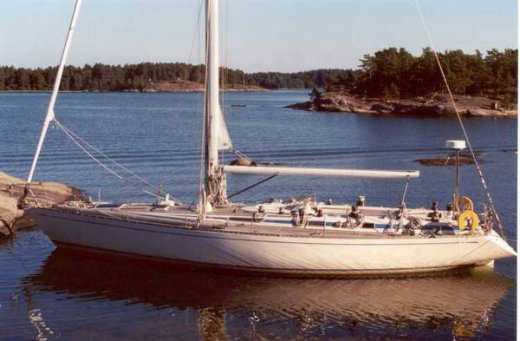
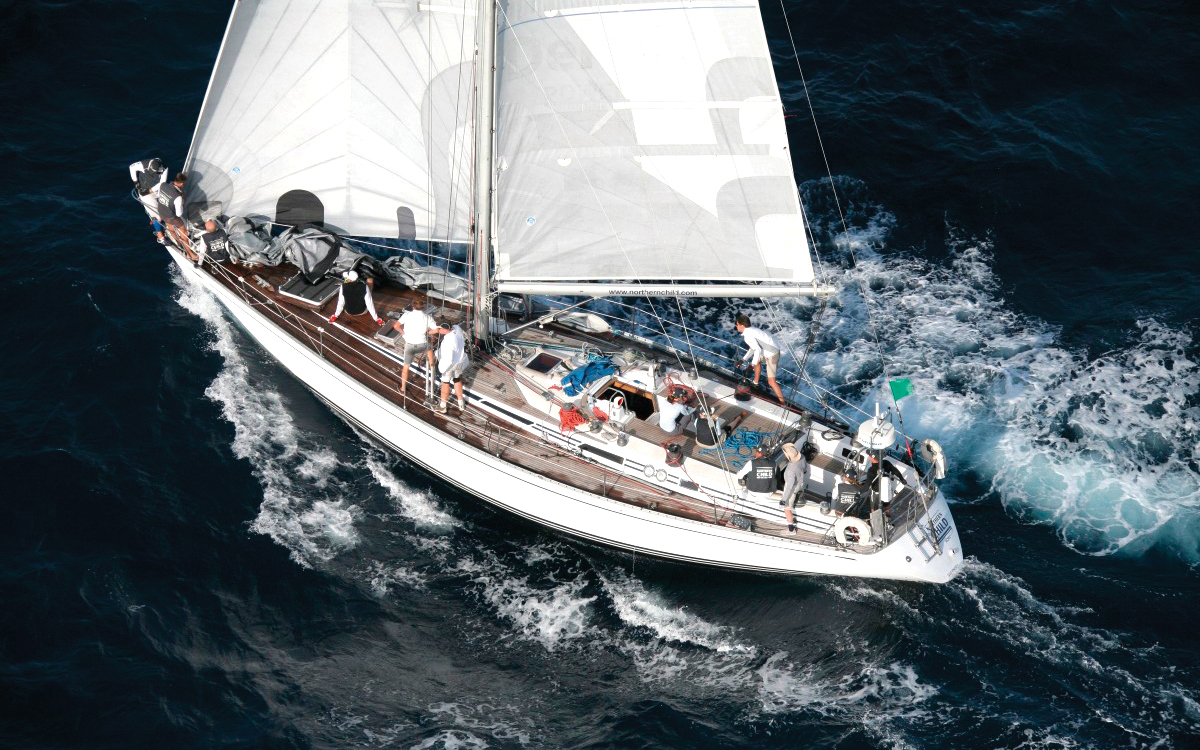
The Swan 51 is a Finnish racer-cruiser designed by Argentinian naval architect Germán Frers and built by Oy Nautor AB between 1980 and 1985, with 36 hulls completed. It holds a notable place in sailing history as the first Swan model designed by Frers, marking the beginning of a long and productive partnership between the designer and the Finnish yard. The design proved remarkably enduring: a decade after its introduction, it remained competitive enough to claim an IOR championship in 1991.
The boat earned a place on boats.com's list of the six best Nautor Swan yachts of all time and is widely regarded as a milestone in the evolution of the performance-cruiser genre. With a Capsize Screening Formula of 1.7 and a Comfort Ratio of 38.0, it sits comfortably within the range considered safe and manageable for offshore and bluewater passages.
Design and Construction
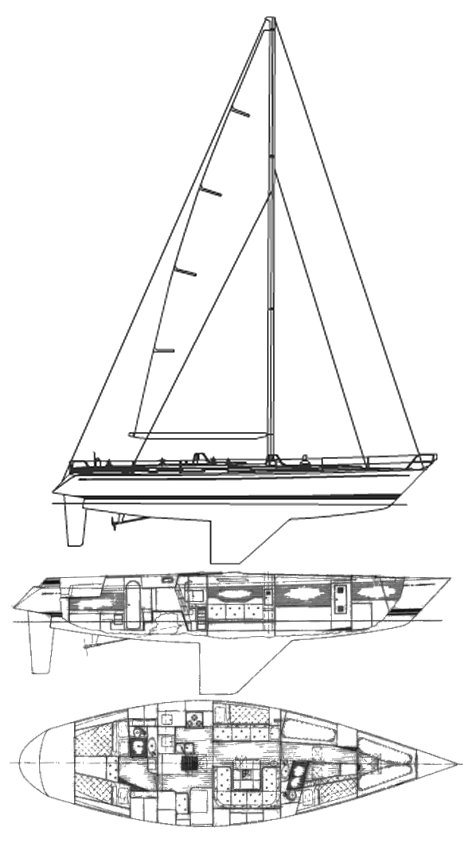
The Swan 51 is built on a glassfibre (GRP) hull with teak and wood trim throughout. The hull form features a raked stem, reverse transom, and a fixed fin keel carrying 16,500 lb of lead ballast, with an optional centreboard variant also available. Steering is handled by an internally mounted spade-type rudder operated by a wheel, a configuration that was considered refined for its era.
The rig is a masthead sloop with an aluminium mast stepped on the keel, three sets of unswept spreaders, and stainless steel standing rigging. The sail plan is generous, giving a sail-area-to-displacement ratio of around 17.9, which allowed the boat to approach hull speed in moderate conditions while retaining the stability expected of a bluewater passage-maker.
Under Sail
With a theoretical hull speed of 8.72 knots and a displacement-to-length ratio of roughly 233, the Swan 51 falls into the moderate-cruiser category — capable of brisk passages without the heavy motion associated with heavier bluewater designs. Its ballast-to-displacement ratio of about 41.7 percent provides a firm righting moment in stronger winds, a characteristic that made it a credible offshore racer as well as a passage-maker.
The PHRF handicap range of 27 to 54 (fin keel) reflects the boat's dual personality: at the lower end of the range it was competitive with dedicated racing designs of the early 1980s, while the more relaxed end of the range suits a fully outfitted cruising configuration. The centreboard variant carries a PHRF of 42 to 54 and offers the option of reduced draft for coastal cruising.
Specifications
| LOA | 51' 3" (15.62 m) |
|---|---|
| LWL | 42' 4" (12.90 m) |
| Beam | 14' 8" (4.47 m) |
| Draft | 8' 11" (2.71 m) |
| Displacement | 39,600 lb (17,962 kg) |
| Ballast | 16,500 lb (7,484 kg) lead |
| Sail Area | 1,290 sq ft (119.9 m²) upwind total |
| Engine | Perkins diesel, 73 hp (54 kW) |
| Fuel | 69 US gal (260 L) |
| Water | 184 US gal (700 L) |
| Designer | Germán Frers |
| Builder | Oy Nautor AB (Finland) |
| Years Built | 1980–1985 (36 built) |
| Rig | Sloop |
| Keel | Fin keel |
Accommodation
Below decks the Swan 51 accommodates six people in three separate areas. The forward cabin provides a double berth with an en-suite head and shower. The main saloon is arranged around a U-shaped settee on one side and a straight settee with pilot berth opposite, giving comfortable seating for six at the table. An aft cabin offers a double and a single berth with its own head and shower.
The port-side galley is a U-shaped unit equipped with a three-burner stove and oven, ice box, and double sink. A starboard navigation station carries the chart table, instruments, radio, radar, and GPS. Interior joinery is finished in teak with a teak-and-holly cabin sole, giving the space the warm, craftsmanlike feel associated with Nautor Swan builds of the period.
Links, References and Further Reading
Image Gallery