RM 1370
Overview
The RM 1370 is the largest model in the RM Yachts lineup produced by the French yard Fora Marine. Introduced in 2017 and designed by naval architect Marc Lombard — who is responsible for the entire RM range — the 1370 measures 14.74 m overall (48'5") with a waterline length of 13.00 m. It targets the fast offshore cruiser segment, combining bluewater seakeeping with the kind of speed typically associated with racers. Three keel configurations are offered: a deep T-shaped fin keel (2.45 m draft), a swing keel that raises to 1.95 m for shallow-water access, and a twin-keel version that lets the boat dry out on tidal flats — a practical choice for European Atlantic-coast sailing.
The 1370 is certified CE Category A, meaning it is approved for ocean passages. Its inverted bow profile, chined hull sections, and integrated bowsprit reflect contemporary performance-cruiser thinking. The model evolved from the earlier RM 1360, with Marc Lombard refining the bow geometry and adding a permanent bowsprit for gennaker or Code 0 deployment.
Design and Construction
Like every boat from Fora Marine, the RM 1370 is built using the yard's proprietary CP Epoxy method: marine plywood panels are vacuum-infused with epoxy resin and reinforced with fiberglass cloth and Kevlar at structural joints. This technique produces a hull that is notably lighter and stiffer than a conventional solid-GRP layup, while also offering good thermal and acoustic insulation. At the keel root and chainplate zones, a resin-encapsulated steel structure provides concentrated load transfer.
The result is a hull surface of exceptional smoothness and a weight budget that remains well below comparably sized cruising yachts of traditional construction. The light displacement, combined with a relatively high ballast ratio of 31 percent, gives the 1370 a stiff initial stability curve well suited to offshore work.
Under Sail
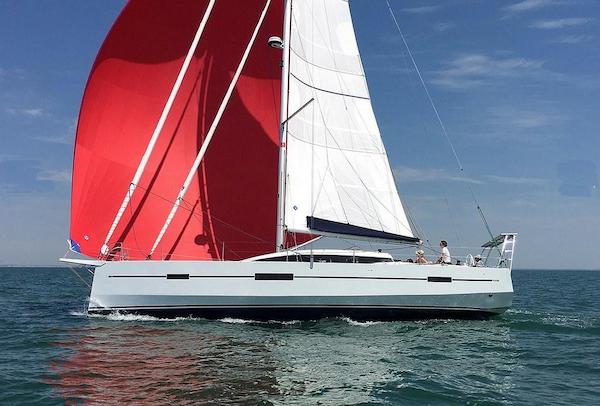
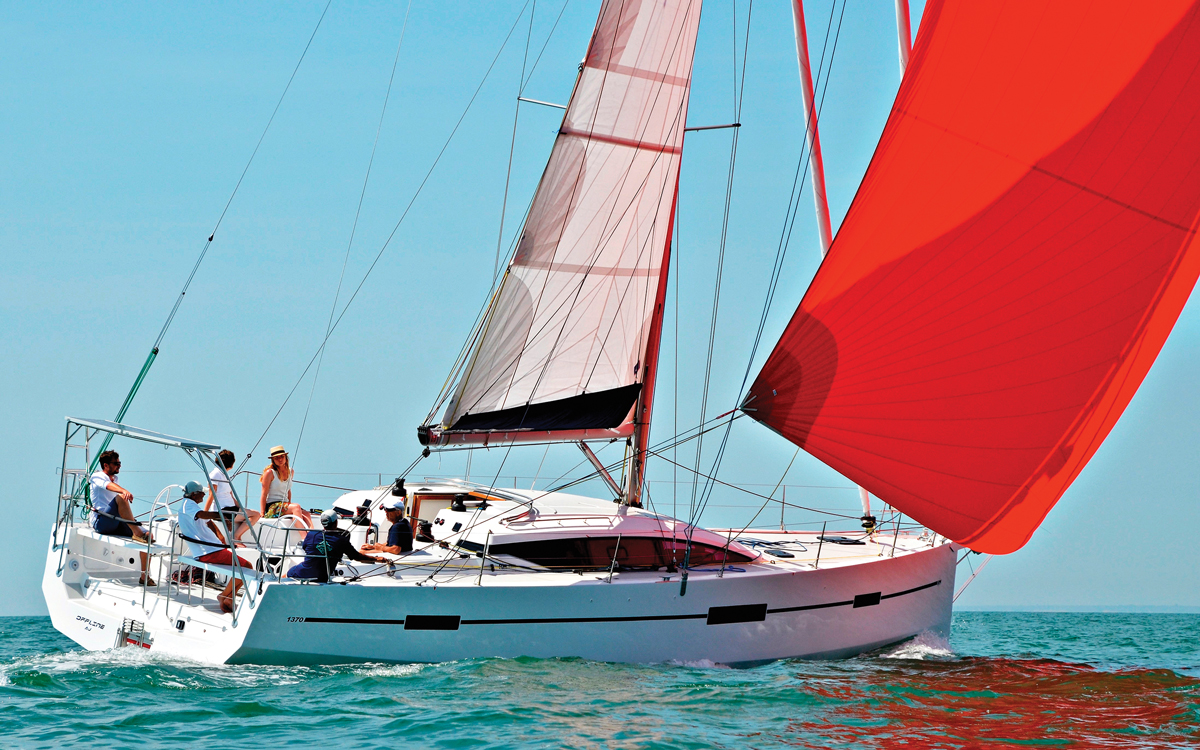
The RM 1370 carries a fractional cutter rig with a 9/10 forestay and a removable inner forestay, giving the crew flexibility between a full genoa in light air and a staysail configuration in strong winds. With 117 m² upwind and a gennaker plan of 229.5 m², the boat accelerates readily in moderate conditions. Reviewers have noted that the yacht holds speeds above 7 knots in winds as light as 10 knots, and that the helm is responsive without feeling nervous or demanding.
The twin-wheel steering arrangement is wide (cockpit breadth at the wheels is 318 cm), keeping helmsmen in a comfortable position with clear sightlines to the sails. Six primary winches are arranged so that a single crew member can manage all control lines from one side of the cockpit. The Volvo Penta D2-75 diesel delivers more than 6 knots at a relaxed 2,000 RPM, with a maximum of around 8.5 knots under power.
Specifications
| LOA | 48' 5" (14.74 m) |
|---|---|
| Hull Length | 44' 11" (13.68 m) |
| LWL | 42' 8" (13.00 m) |
| Beam | 14' 10" (4.50 m) |
| Draft (fin keel) | 8' 0" (2.45 m) |
| Draft (swing keel, up) | 6' 5" (1.95 m) |
| Displacement (light) | 21,006 lbs (9,528 kg) |
| Displacement (loaded) | 29,183 lbs (13,237 kg) |
| Ballast | 6,504 lbs (2,950 kg) |
| Ballast Ratio | 31% |
| Sail Area (upwind) | 1,259 sq ft (117 m²) |
| Sail Area (downwind) | 2,470 sq ft (229.5 m²) |
| Engine | Volvo Penta D2-75, 75 HP diesel (inboard) |
| Fuel Capacity | 92.5 gal (350 L) |
| Water Capacity | 158.5 gal (600 L) |
| Designer | Marc Lombard Yacht Design Group |
| Builder | Fora Marine / RM Yachts (France) |
| Year Introduced | 2017 |
| Rig | Cutter |
| Keel | Fin keel |
Accommodation
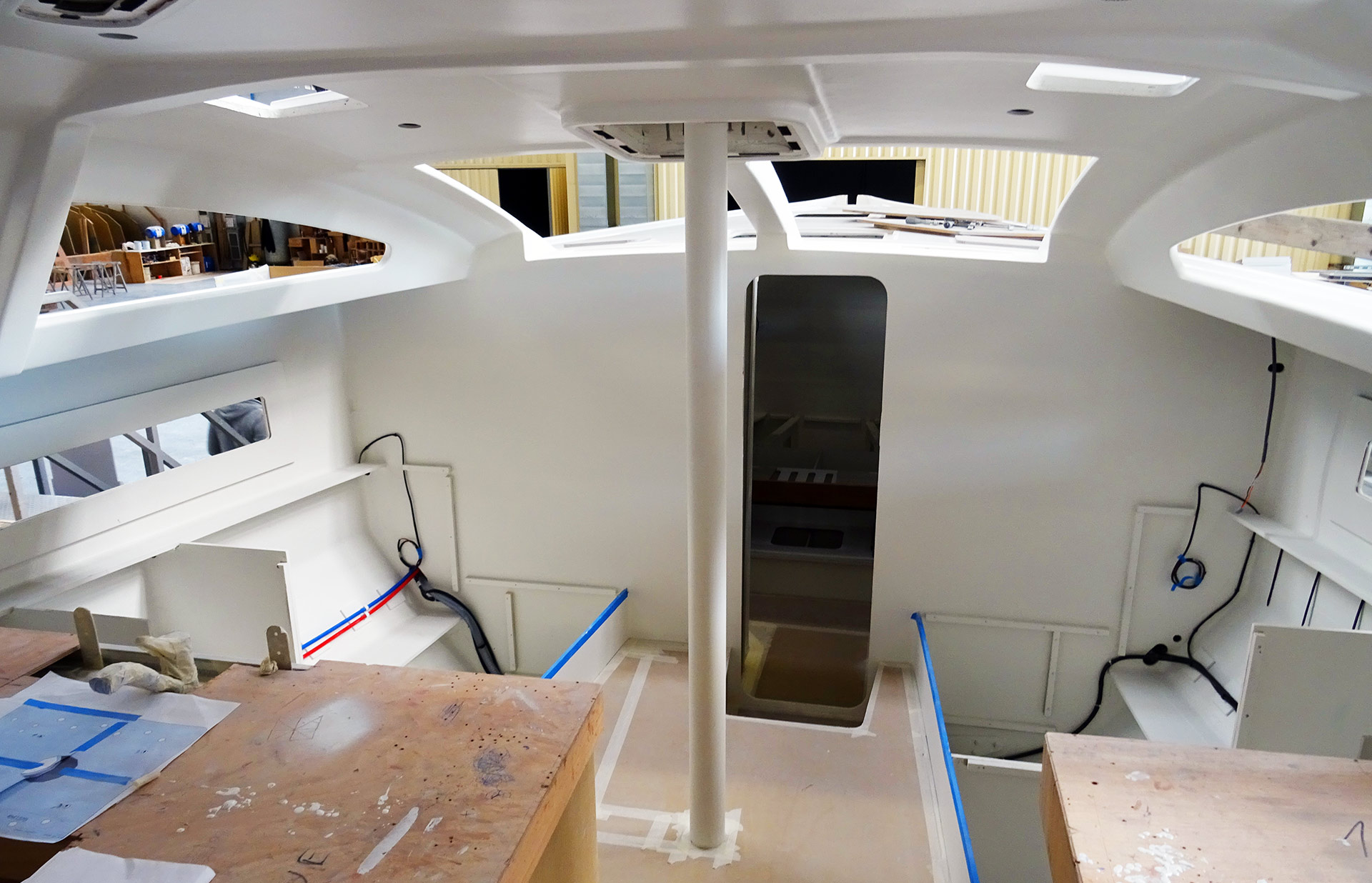
The interior is arranged as a three-cabin, two-bathroom layout. A full-sized chart table sits at the top of the companionway with an elevated vantage point and 300-degree visibility — an unusual feature in a modern production cruiser. The main saloon features two facing three-person settees and a folding table positioned around the mast. Large windows and deck-level portholes flood the saloon with natural light, giving the space an airy quality reminiscent of a deck-saloon design.
The owner's forward cabin provides 190 cm of headroom, a wide double berth, and a split bathroom with separate WC and shower. Two aft cabins can be configured as either single bunks or a double, with generous stowage beneath. A well-equipped galley offers a two-burner-plus stove, a two-tier sink, a large combined refrigerator-freezer, and extensive counter space. Fuel and water tanks are positioned low amidships rather than under berths, keeping weight near the center of buoyancy.
Links, References and Further Reading
Image Gallery