Pogo 50
Overview
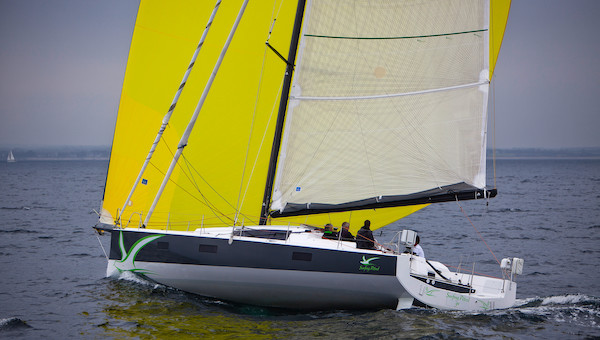
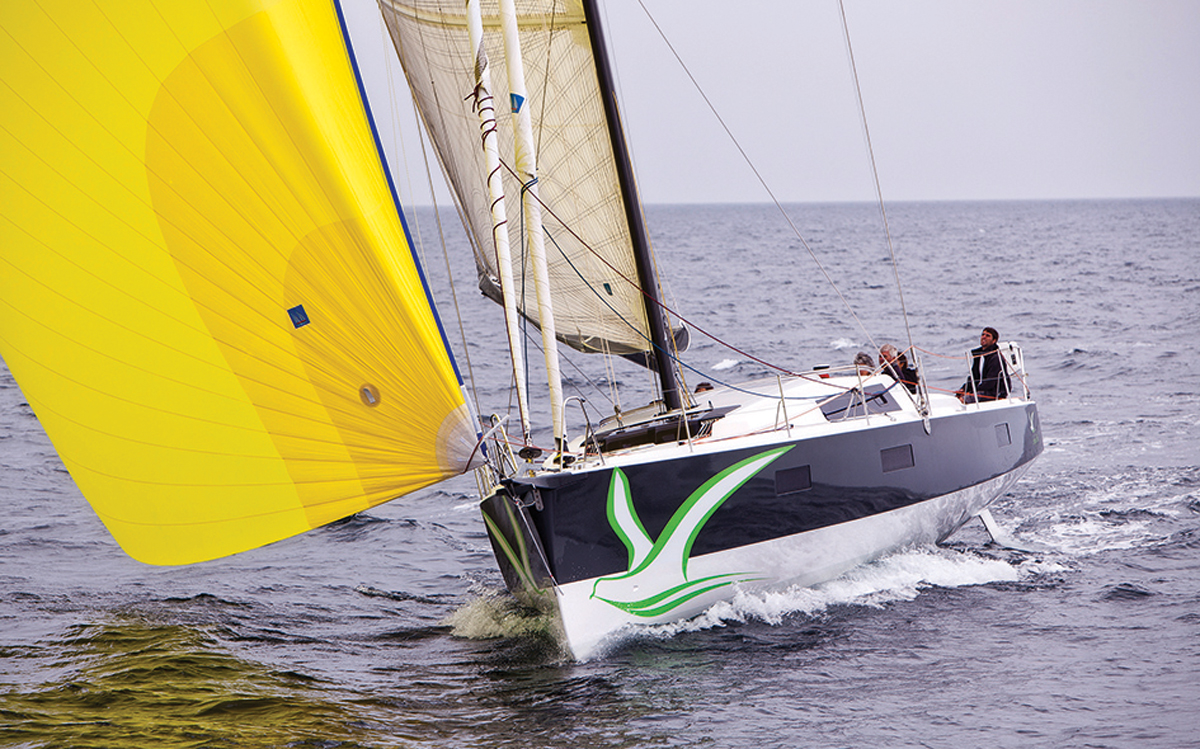
The Pogo 50 is a 15-metre high-performance cruising sloop built by French yard Pogo Structures and designed by Finot-Conq Architectes. Introduced in 2012 and produced through approximately 2020, it occupies the upper end of Pogo's range — a boat conceived for sailors who want genuine offshore speed without sacrificing the capability to explore shallow anchorages. Its CE Category A (Ocean) rating confirms its credentials for open-water passages, and its real-world pedigree is underlined by a second-place overall finish in the 2012 ARC transatlantic rally, logging an average speed of 12.64 knots over 2,680 miles.
The most distinctive feature is a retractable swing keel that drops to 3.50 m for maximum upwind power and stiffness, then rises to just 1.50 m for gunkholing or entering shallow harbours. Twin spade rudders and twin tillers complete an appendage package oriented toward speed and directional control rather than traditional cruising simplicity.
Design and Construction
Pogo Structures builds the hull and deck using resin infusion technology with a vacuum-bagged foam sandwich core — glass fibre skins bonded over a PVC foam core provide a high strength-to-weight ratio at a light displacement of just 8,900 kg for a 16-metre hull. The keel itself is a glass-fibre and vinylester fin with a lead bulb, combining structural lightness in the fin with ballast concentration in the bulb. Watertight bulkheads and buoyancy foam integrated throughout the hull make the boat effectively unsinkable, an important safety consideration for bluewater passages.
A carbon mast carries a square-top mainsail on a 9/10 fractional rig with no backstay, keeping the deck uncluttered. The rig is configured for performance shorthanded sailing with sail controls led aft to the cockpit. An asymmetric spinnaker of 200 m² and a gennaker of 120 m² round out the downwind wardrobe, allowing the boat to plane in suitable conditions.
Under Sail
The wide beam of 5.15 m provides powerful initial stability, and together with the deep lifting keel the boat delivers strong upwind performance for a cruising hull of this size. Downwind the Pogo 50 is genuinely quick: the flat run, light displacement, and generous spinnaker area allow it to plane in trade-wind conditions, making transatlantic or Pacific passages considerably faster than a conventional cruising yacht of similar length. The rig — with its square-top main and furling solent plus inner forestay — suits two-handed ocean sailing.
Cockpit ergonomics prioritise performance and safety at sea. The open aft design, tiller steering, and absence of a backstay make sail handling straightforward. The boat's speed potential does demand attentive helming in strong winds, and it rewards crews who embrace its sporty character rather than seeking a passive autopilot passage-maker.
Specifications
| LOA | 53' 1" (16.15 m) |
|---|---|
| LWL | 49' 11" (15.20 m) |
| Beam | 16' 11" (5.15 m) |
| Draft (keel down) | 11' 6" (3.50 m) |
| Draft (keel up) | 4' 11" (1.50 m) |
| Displacement | 19,621 lbs (8,900 kg) |
| Ballast | 7,055 lbs (3,200 kg) |
| Sail Area (upwind) | 1,625 ft² (151 m²) |
| Sail Area (downwind) | ~3,100 ft² (288 m²) |
| Engine | Volvo 55 HP diesel |
| Fuel | 66 gal (250 L) |
| Water | 147.9 gal (560 L) |
| Designer | Finot-Conq Architectes (France) |
| Builder | Pogo Structures (France) |
| Year | 2012–2020 |
| Rig | Sloop |
| Keel | Fin keel |
Accommodation
Below decks the Pogo 50 offers a practical three-cabin, two-head layout accommodating six to eight people. The saloon is notably spacious for a performance hull of this displacement, with a large U-shaped galley suited to extended ocean passages. Numerous overhead hatches and a forward-facing coachroof window keep the interior bright and well-ventilated — an important comfort factor in the tropics where this boat is likely to spend much of its time.
Interior materials and joinery follow Pogo's philosophy of keeping weight low and maintenance manageable: the fit-out is purposeful rather than opulent, with the design priority firmly on seakeeping and speed rather than hotel-standard luxury. Storage is generous, with the wide beam providing volume that many narrower performance yachts cannot match.
Links, References and Further Reading
Image Gallery