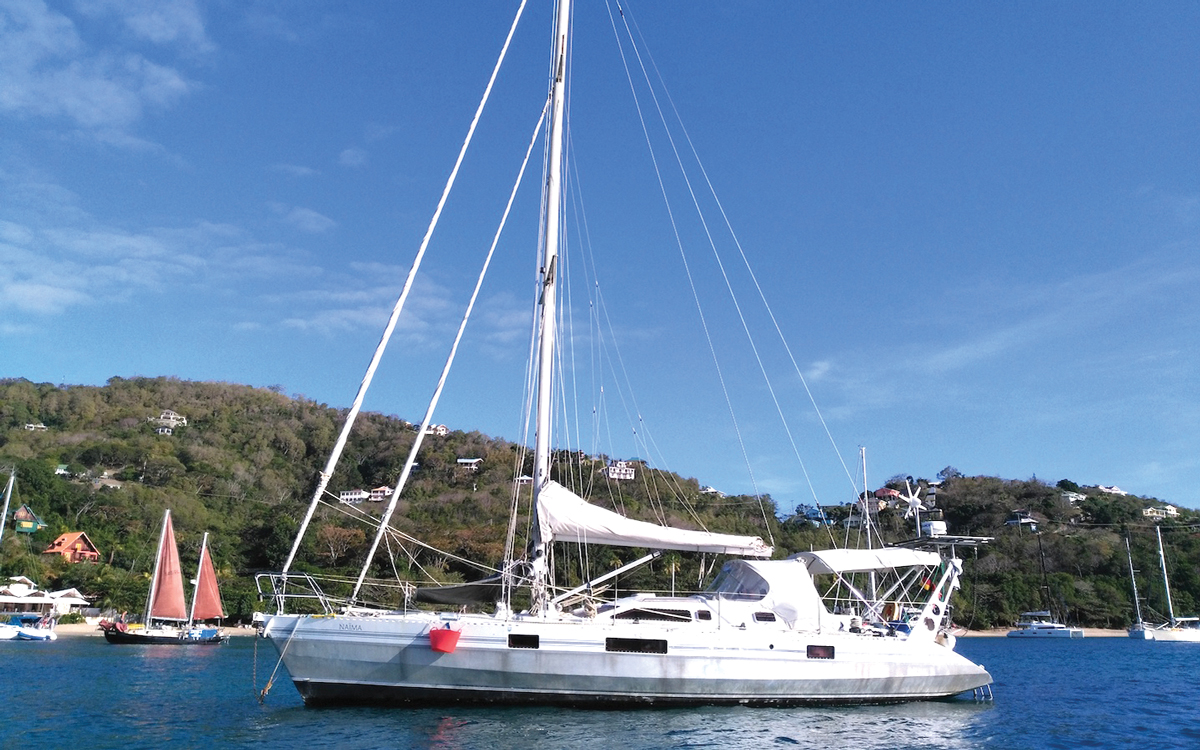
Ovni 43
Overview
The Ovni 43 is a 42-foot aluminium lifting-keel cruiser designed by Philippe Briand and produced by the French yard Alubat between 1991 and 2000, with 68 hulls completed. It occupies a well-regarded position in the bluewater cruising world, built specifically for sailors who want to cross oceans but also explore shallow anchorages, tidal flats, and uncharted coastal waters that would be off-limits to a fixed-keel yacht.
The boat gained particular fame when Jimmy Cornell — founder of the Atlantic Rally for Cruisers (ARC) — completed his second circumnavigation aboard an Ovni 43 named Aventura II, lending the model considerable credibility in long-distance sailing circles. Alubat itself was founded in 1973 and has concentrated exclusively on lifting-keel aluminium construction, becoming Europe's leading builder in that niche.
Design and Construction
The hull is fabricated from 5083 H111 marine-grade aluminium alloy, chosen for its combination of strength, light weight, and excellent resistance to corrosion in saltwater environments. The round-bilge hull form contributes to a comfortable motion at sea and efficient performance across a range of sea states. The underbody features a hydraulically operated centreplate that can be raised or lowered to change draft from a minimum of 0.80 m to a maximum of 2.50 m, and the spade rudder is likewise winch-lifted so the boat can take the ground or navigate very thin water without damage.
A ballast/displacement ratio of 42.4 percent reflects the substantial lead in the keel structure, giving the Ovni 43 meaningful initial and ultimate stability despite its ability to retract its foils. The rig is a masthead cutter, providing a versatile sail plan suited to offshore passages: the inner forestay allows a staysail to be deployed when conditions deteriorate, reducing the sail plan in a controlled and well-balanced way.
Under Sail
With a displacement/length ratio of 211 and a sail area/displacement ratio of 22.0, the Ovni 43 sits in the moderate-displacement cruiser category — capable of carrying substantial stores and equipment without becoming sluggish, but not a lightweight flyer in gentle breezes. Once the wind pipes up above about 10 knots the round-bilge hull shape and the long waterline (34 feet) allow the boat to move freely and efficiently. Owners report the design handles heavy weather well, with accounts of comfortable sailing in 40–50 knot conditions under three reefs and a reduced staysail.
The lifting keel and rudder combination is the Ovni 43's defining characteristic under sail: in shoal water the board can be partially raised to reduce draft while still providing adequate lateral resistance, and the ability to fully retract everything allows the boat to dry out upright on a beach or tidal grid for maintenance. The Ted Brewer Comfort Ratio of 23.3 indicates a motion that is somewhat lively rather than deeply damped, which is typical for aluminium cruisers of this era and displacement.
Specifications
| LOA | 42' 4" (12.90 m) |
|---|---|
| LWL | 34' 2" (10.40 m) |
| Beam | 14' 2" (4.30 m) |
| Draft (board down) | 8' 3" (2.50 m) |
| Draft (board up) | 2' 7" (0.80 m) |
| Displacement | 18,739 lb (8,500 kg) |
| Ballast | 7,937 lb (3,600 kg) |
| Sail Area | 968 ft² (89.93 m²) |
| Designer | Philippe Briand |
| Builder | Alubat (France) |
| Year(s) | 1991–2000 (68 built) |
| Hull Material | Aluminium |
| Rig | Cutter |
| Keel | Fin keel |
Accommodation
Below decks the Ovni 43 offers three separate cabins and two heads for a total berth count suitable for a cruising couple or small family. The forward cabin features a double berth and its own en-suite head, while two aft cabins share a second head. The saloon is arranged around a U-shaped settee, providing a sociable and practical gathering space at sea and in port.
The galley is well-specified for offshore work, with a double sink, three-burner cooker with oven, and refrigeration. A dedicated chart table supports navigation. The cockpit is roomy and practical, with two large lockers, a folding table, an integrated bathing platform at the stern, and six self-tailing winches to allow short-handed sail handling. Lazy jacks and a stack pack simplify mainsail management.