JPK 45
Overview
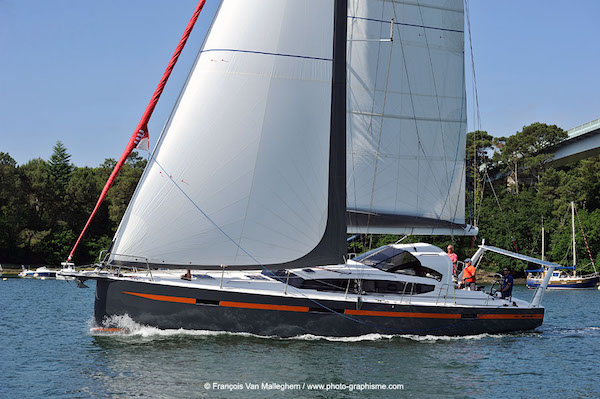
The JPK 45 FC (Fast Cruiser) is a high-performance bluewater sailing yacht produced by JPK Composites in Brest, France, introduced in 2016. Conceived by Jean-Pierre Kelbert — the founder behind the JPK brand — as his personal vision of an ideal long-range cruiser, the design was drawn by naval architect Jacques Valer, who has shaped all of JPK's sailing models. The boat sits at an unusual intersection: it carries the DNA of a race yacht yet is outfitted for extended ocean passages, earning a nomination as a 2017 European Yacht of the Year finalist.
The 45 FC is available in two keel configurations — a standard fixed bulb fin keel drawing 2.20 m and a shorter sabot-style keel drawing 1.90 m — as well as two interior layout options. It holds an EC Design Category A certification, confirming suitability for offshore ocean passages.
Design and Construction
The hull is built using a one-shot resin-infusion process over a foam sandwich core, allowing the hull shell and internal structural grid to be laminated in a single operation. High-density foam is used in areas of elevated stress, while lighter foam cores reduce weight elsewhere. Interior furniture panels are also moulded and laminated into the hull, contributing to overall structural stiffness rather than functioning as simple fit-out. The result is a light, rigid structure that punches well below its apparent size in terms of displacement-to-length ratio (around 123).
The keel options reflect the yard's racing background: the standard fin carries a lead bulb on a cast-iron fin, while the short-keel variant uses a higher proportion of lead to compensate for reduced depth. A carbon mast is offered as an option. Twin rudders and a broad stern contribute to stability and control at speed.
Under Sail
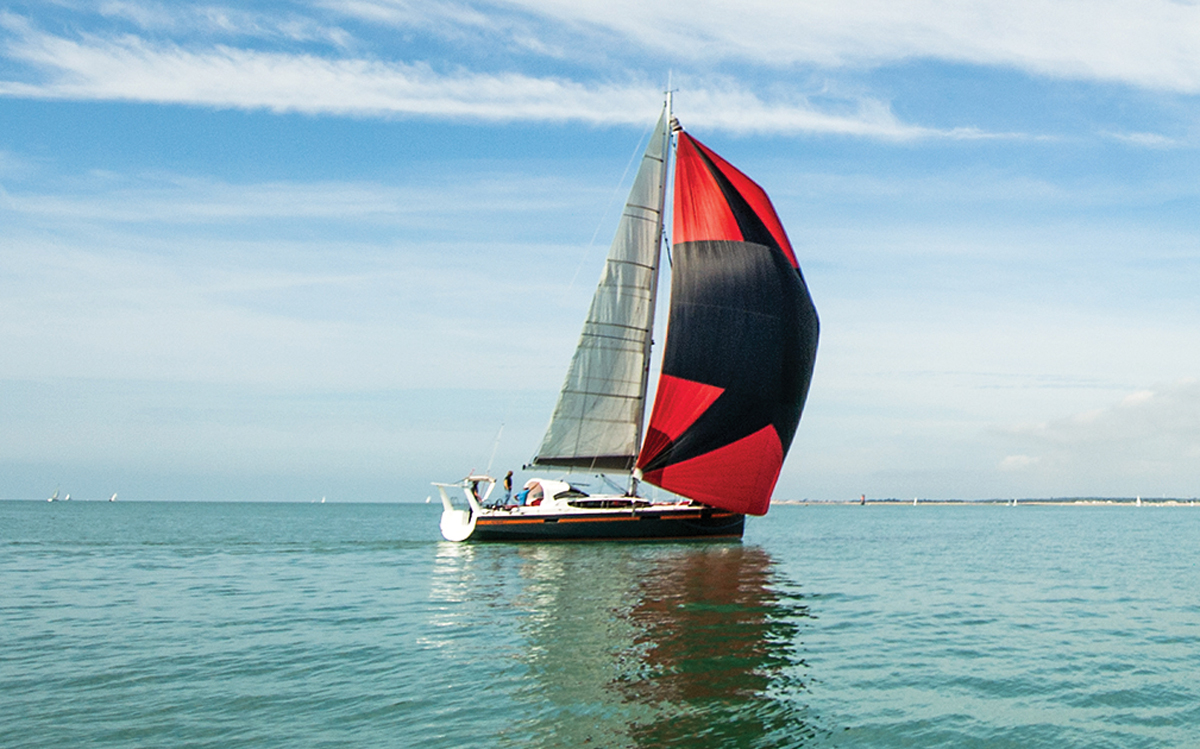
The JPK 45 FC is built to move. In Yachting World's sea trial, the boat sustained approximately 8 knots in just 10 knots of true wind upwind, and with a gennaker or asymmetric spinnaker deployed downwind it can match or exceed true wind speed in light airs. The fractional 9/10 sloop rig with twin headsail furlers — a genoa and a staysail — allows flexible sail plans for short-handed sailing, a primary design target. Sail area-to-displacement ratio sits around 25.6, placing it firmly in the performance cruiser bracket.
The boat is noted for responsive, direct helm feel, with the twin-rudder configuration maintaining good control at heel. Owners have used it for challenging offshore voyages including crossings to Patagonia and high-latitude passages, reinforcing its credentials as a genuinely capable bluewater platform.
Specifications
| LOA | 45' 4" (13.80 m) |
|---|---|
| LWL | 42' 4" (12.91 m) |
| Beam | 14' 9" (4.50 m) |
| Draft (standard keel) | 7' 3" (2.20 m) |
| Draft (short keel) | 6' 3" (1.90 m) |
| Displacement | 20,944 lbs (9,500 kg) |
| Ballast | 8,818 lbs (4,000 kg) |
| Sail Area (upwind) | 1,216 ft² (113 m²) |
| Engine | Volvo Penta D2 50 hp diesel |
| Fuel Capacity | 79 gal (300 L) |
| Water Capacity | 176 gal (800 L) |
| Designer | Jacques Valer |
| Builder | JPK Composites (Brest, France) |
| Year Introduced | 2016 |
| Rig | Sloop |
| Keel | Fin keel |
Accommodation
Below decks the JPK 45 FC offers a raised saloon layout with a fixed table seating six, a longitudinal galley running along the port side, and a choice of interior arrangements providing three double cabins with berths for four to eight crew. The forward cabin offers around 6 ft 1 in of headroom. A single heads compartment is standard, with a second heads available as an option.
The interior aesthetic follows the functional, moulded-composite approach of the hull: surfaces are structural as well as decorative, keeping weight down and reducing the number of loose fittings at sea. Stowage is extensive by performance-cruiser standards, and the nav station and cockpit layout are configured for shorthanded offshore work.
Links, References and Further Reading
Image Gallery