Discovery 55
Overview
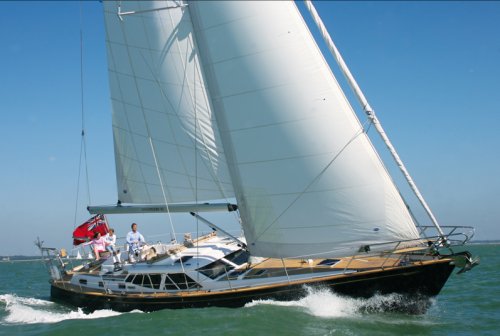
The Discovery 55 is a 54-foot 9-inch bluewater cruising sloop designed by Ron Holland and built in the UK by Discovery Yachts from 2000 to 2019, with approximately 50 hulls completed. The design was in many ways the founding boat of the Discovery Yachts brand — the company's founders settled on the 55-foot length after working out how much gear a serious offshore passage-making couple would need to carry. A Mark II version followed in 2014 with revised interior detailing and updated window styling.
The boat is aimed squarely at couples or small crews wanting to cruise bluewater routes such as the Atlantic Rally for Cruisers (ARC) and beyond, combining a manageable sail plan with generous tankage and comfortable live-aboard accommodation. Its large fuel capacity of 1,334 litres and water capacity of 1,008 litres give it the autonomy to make extended offshore passages without resupply.
Design and Construction
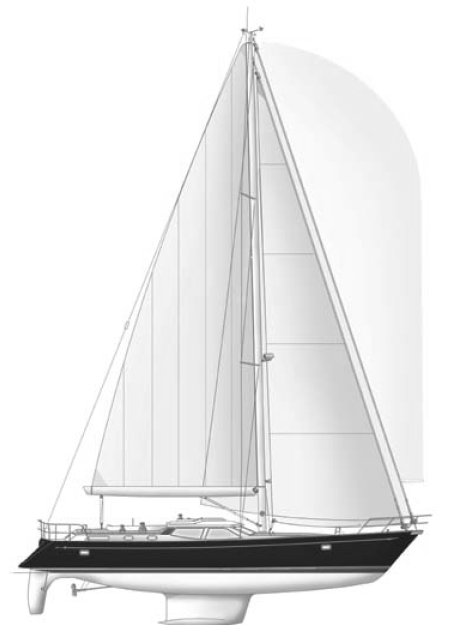
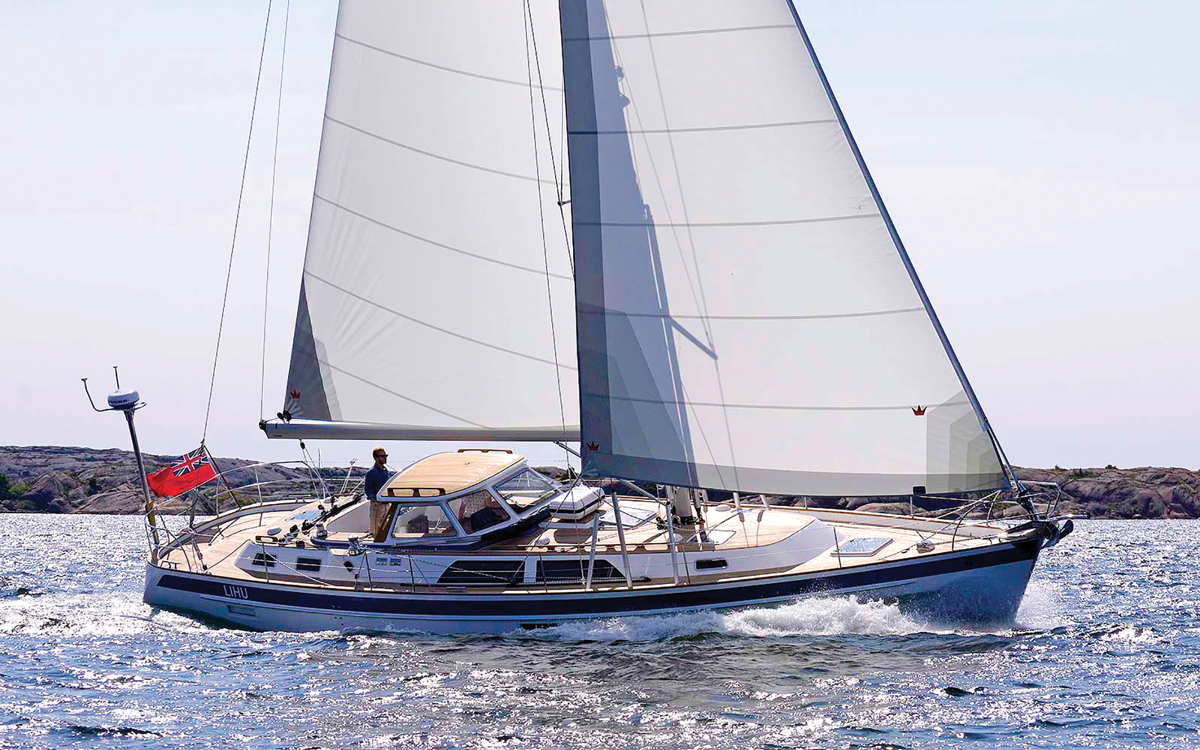
The Discovery 55 is a GRP monohull with a centre-cockpit layout and a raised deck saloon that provides panoramic views from below while also protecting the watch-keeper. Ron Holland's hull form aims for a good balance of stability and seakeeping: the ballast-to-displacement ratio of around 42 percent means the boat carries sail well and has strong initial and secondary stiffness. The fin keel and skeg-hung rudder arrangement separates directional stability from turning agility, a practical choice for offshore sailing where reliability and robustness matter more than racing performance. Owners could choose between a standard-draft fin keel drawing 2.23 m and a shoal-draft variant at 1.80 m for cruising areas with shallower anchorages. Most boats were built with a cutter rig, which gives passage-makers useful flexibility in headsail selection across a wide range of wind strengths and sea states.
Under Sail
With a sail-area-to-displacement ratio of around 14.7, the Discovery 55 is a moderate performer that favours breeze over light airs. In light conditions motor-sailing is often the practical choice, but once there is wind on the beam or a reach, the boat moves well through the water. The displacement-to-length ratio of roughly 186 places it in the light-to-moderate displacement category, giving a comfortable motion offshore rather than the hobby-horsing that can affect heavier vessels. The cutter arrangement, with a self-tacking inner jib and a furling genoa, keeps sail handling simple for a shorthanded crew, and the protected centre cockpit allows safe watch-keeping in heavy weather. The boat's high ballast ratio and hull form also give it a strong righting moment if knocked down, an important safety attribute for bluewater passage-making.
Specifications
| LOA | 54' 9" (16.70 m) |
|---|---|
| LWL | 49' 3" (15.0 m) |
| Beam | 15' 8" (4.78 m) |
| Draft (standard keel) | 7' 4" (2.23 m) |
| Draft (shoal keel) | 5' 11" (1.80 m) |
| Displacement | 49,604 lb (22,500 kg) |
| Ballast | 20,940 lb (9,500 kg) — lead |
| Sail Area (main + self-tacking jib) | 1,238 sq ft (115 m²) |
| Sail Area (with 140% furling genoa) | 1,435 sq ft (133.3 m²) |
| Engine | 160 hp diesel |
| Fuel | 352 US gal (1,334 L) |
| Water | 266 US gal (1,008 L) |
| Designer | Ron Holland |
| Builder | Discovery Yachts (UK) |
| Years Built | 2000–2019 |
| Rig | Cutter |
| Keel | Fin keel w/ skeg |
Accommodation
Below decks the Discovery 55 offers a versatile interior in a layout optimised for extended cruising. The standard arrangement centres on a large owner's cabin aft with an en-suite heads, a spacious galley amidships with deep sinks and a full-size fridge-freezer, and a raised deck saloon that doubles as a navigation and watch-keeping station. Forward of the mast there is a double guest cabin plus options for either a twin-berth Pullman cabin and additional heads compartment, or a second large guest suite. Joinery is typically in maple or a similar pale timber, and owners could specify a high degree of customisation at the build stage. Practical details throughout — abundant handholds and grabrails, stand-up showers, deep stowage — reflect the boat's offshore purpose rather than purely marina-based living.
Links, References and Further Reading
Image Gallery