Bestevaer 56
Overview
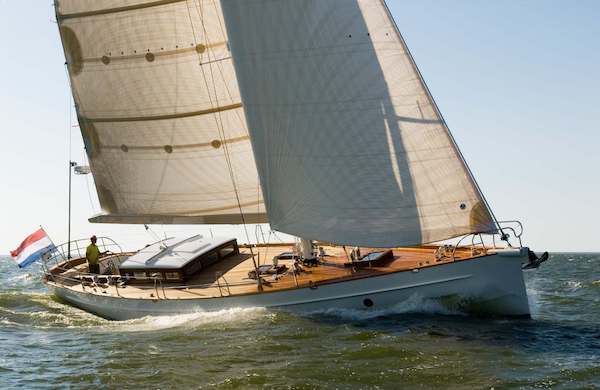
The Bestevaer 56 ST is a custom-built, aluminum expedition sailing yacht conceived by Dykstra Naval Architects and constructed by KM Yachtbuilders in the Netherlands. Introduced in 2006, the design draws on the classic proportions of a traditional pilot cutter — long waterlines, a fine entry, and a shallow canoe body — while incorporating thoroughly modern engineering. The result is a high-latitude bluewater cruiser capable of both shallow-water gunkholing (via its lifting keel) and extended offshore passages.
Each Bestevaer 56 is built to order for a specific owner, making the type a semi-custom platform rather than a production boat. Named examples include Tranquilo (2006, now Falcon Spirit), HannaH (2009), and Panta Rhei (2023). While individual vessels share essentially the same proven hull, deck layouts, interior arrangements, and detailed specifications differ considerably from boat to boat.
Design and Construction
The hull and, on some versions, the superstructure are fabricated from seawater-resistant 5083-series aluminium plate, ranging from 4 mm to 25 mm in thickness depending on location. Carbon fibre spars (Hall Spars carbon mast with Park Avenue boom on early boats) keep topside weight low and improve righting moment. Some later examples pair the aluminium hull with a composite deckhouse to reduce weight aloft. The lifting keel is a signature structural feature: at its minimum draft of 1.80 m the yacht can enter thin-water anchorages; at maximum extension it drops to 3.50 m, adding stability and pointing ability offshore. Optional water ballast tanks — up to 2 × 2,000 litres on some builds — further stiffen the boat in strong breezes.
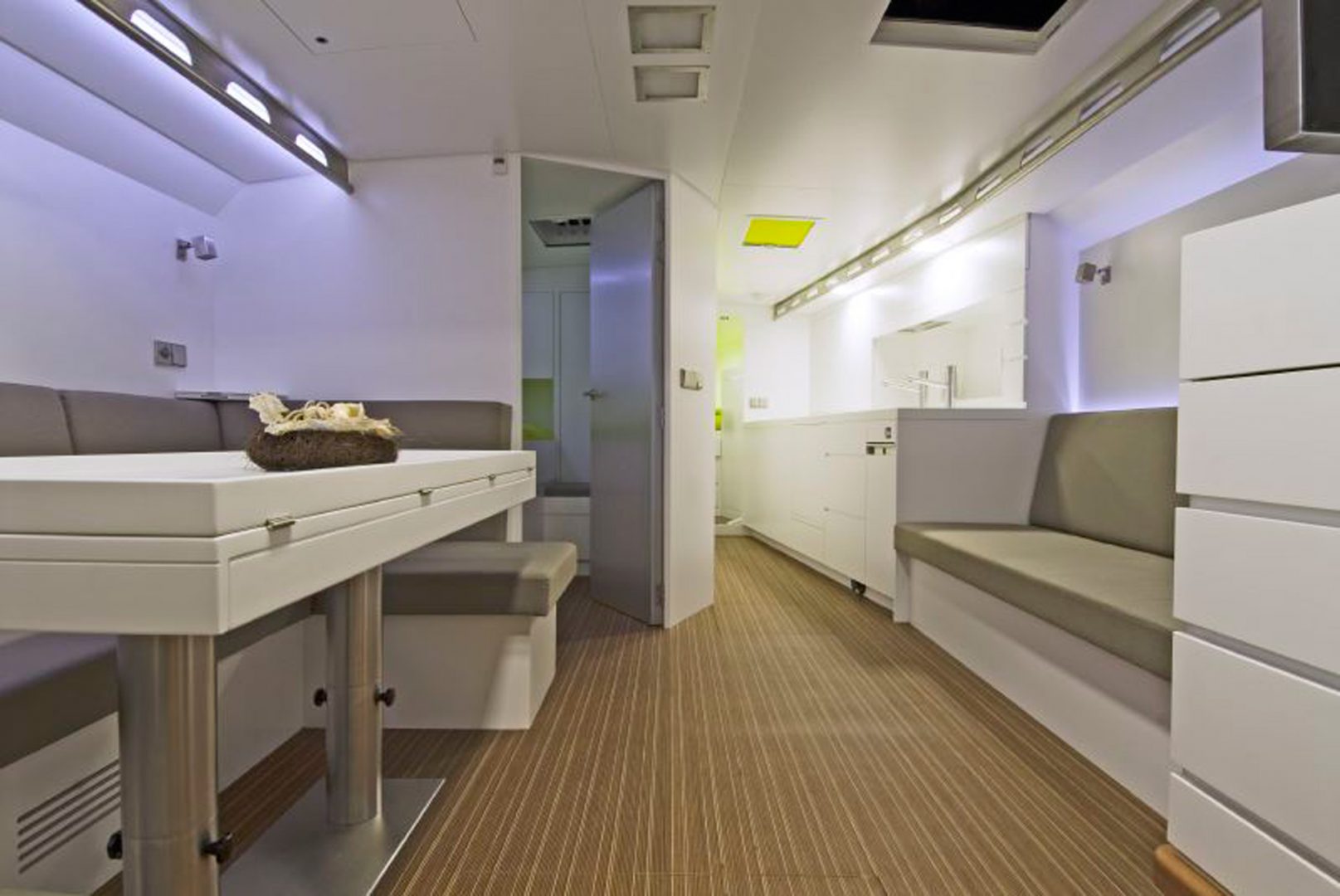
The 56 ST is built to MCA/CE Category A standards for unlimited offshore passage-making. The use of 5083 alloy, a well-understood marine aluminium grade, provides excellent corrosion resistance and weldability. Interior joinery is fully bespoke: early owners chose warm teak and mahogany with a maritime theme, while more recent builds lean toward minimalist, Scandinavian-influenced schemes using lighter woods and matt finishes.
Under Sail
The Bestevaer 56 carries a fractional (7/8) sloop or cutter rig on a carbon mast, with upwind sail area around 150 m² (1,615 sq ft) and a downwind wardrobe that can push total canvas to 280 m² (3,014 sq ft) with a code zero or asymmetric spinnaker. North Sails 3DL-laminate sails have been specified on several builds. A one-line reefing system simplifies shortening down for a shorthanded crew. The fine entry and balanced spade rudder give the boat responsive, predictable steering, while the shallow canoe body limits drag at low angles of heel.
Despite a displacement in the 21–23 tonne range, the Bestevaer 56 ST is regarded as a lively performer for its size and weight. The sail area/displacement ratio of approximately 19.5 places it in the moderate-performance bracket — adequate for the steady trade-wind passages these yachts are designed to make. A diesel auxiliary of 60–110 hp handles calms and harbour manoeuvring, backed by fuel tankage of 1,150 litres for comfortable motor-sailing range.
Specifications
| LOA | 57' 8" (17.58 m) |
|---|---|
| LWL | 49' 1" (14.96 m) |
| Beam | 15' 3" (4.64 m) |
| Draft | 5' 11" – 11' 6" (1.80 – 3.50 m, lifting keel) |
| Displacement | approx. 46,000 – 51,000 lb (21 – 23 tonnes) |
| Ballast | 8,800 lb (4,000 kg) |
| Sail Area (upwind) | 1,615 sq ft (150 m²) |
| Sail Area (running) | 3,014 sq ft (280 m²) |
| Engine | 60 – 110 hp diesel |
| Fuel | 2 × 152 US gal (2 × 575 L = 1,150 L total) |
| Fresh Water | 185 – 370 US gal (350 – 700 L) |
| Hull Material | Marine-grade aluminium (5083 alloy) |
| Designer | Dykstra Naval Architects |
| Builder | KM Yachtbuilders |
| First Built | 2006 |
| Rig | Cutter |
| Keel | Fin keel |
Accommodation
Below decks, the Bestevaer 56 is optimised for a couple or small family on long passages. A typical arrangement includes a full-beam master cabin aft, a separate guest cabin forward, and an open saloon amidships with U-shaped dinette. The forward peak is often configured as a workshop or sail-storage area — practical for extended cruising where self-sufficiency matters. Headroom throughout is generous, and storage volume benefits from the wide, full-length waterlines inherent in the pilot-cutter form.
Because each boat is fitted out individually, accommodation layouts and finish levels vary widely. Owners have used Italian interior designers (as on the AKA build, fitted by Zuanelli), created their own schemes from scratch (Panta Rhei), or opted for traditional naval-themed cabinetry (HannaH). Common to all is the emphasis on seagoing practicality: sea berths with lee cloths, well-positioned grab rails, and a chart-table area sized for serious navigation.
Links, References and Further Reading
Image Gallery