Atlantic 42
Overview
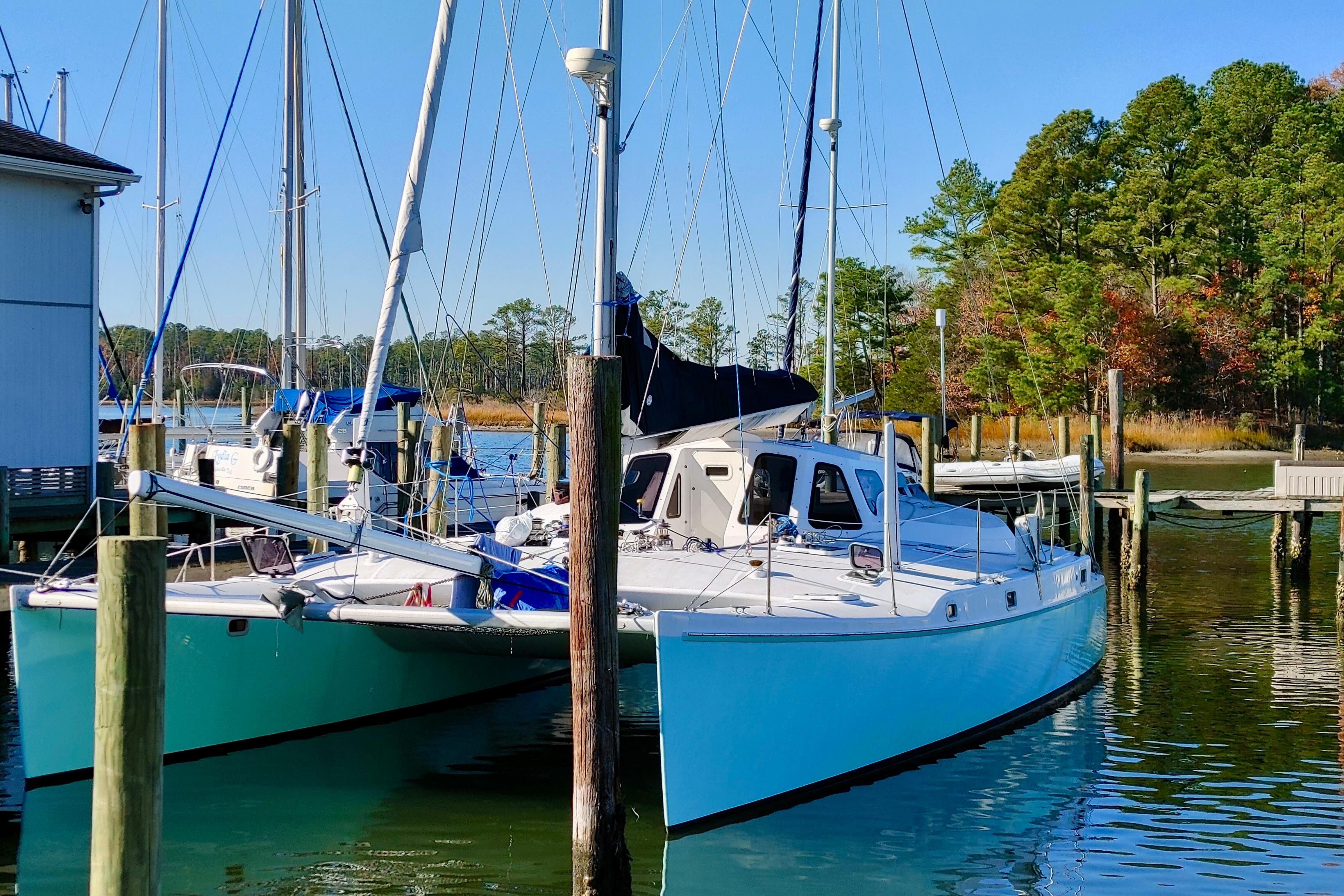
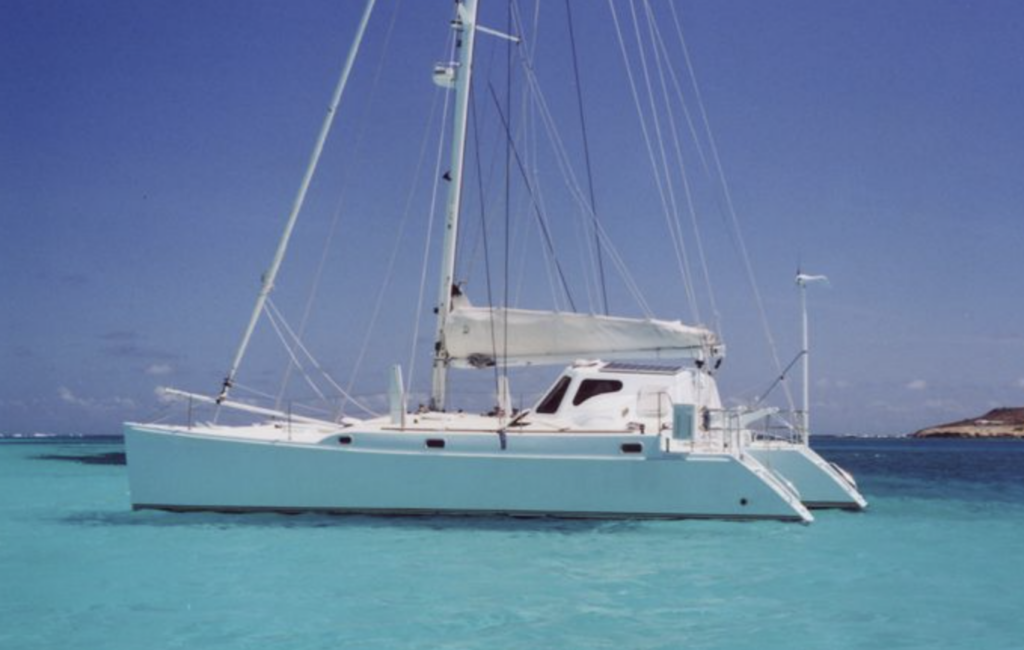
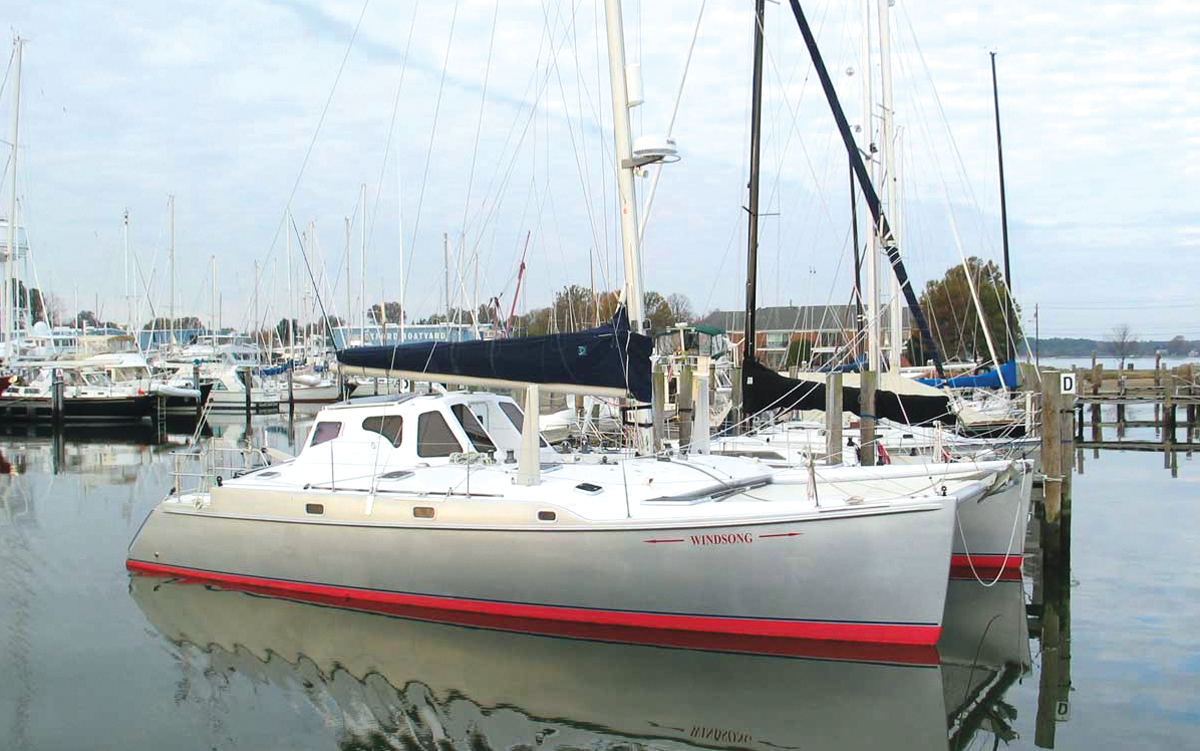
The Atlantic 42 is the smallest model in Chris White's celebrated Atlantic series of high-performance cruising catamarans. Approximately 17 hulls have been built and remain in service worldwide, with the first hull — named Remedy — launched in 1996. While no longer in series production, the design remains available on a custom-build basis. In 1998 the boat was recognized as Best Cruising Multihull at the Boat of the Year competition, a testament to its blend of offshore capability and practical comfort.
The defining feature of the Atlantic 42, shared across the entire Atlantic cat line, is its signature center cockpit positioned forward of the pilothouse, accessible through a full-size door. This arrangement places crew close to the mast for safe sail handling while keeping them well protected, making the boat particularly well suited to short-handed or single-handed bluewater passages.
Design and Construction
The Atlantic 42 is built using epoxy resin with SAN foam core and carbon fiber reinforcement, reflecting Chris White's longstanding emphasis on weight control and structural stiffness. Older hulls were constructed using wood-epoxy methods, while later examples use female-mould fiberglass composite techniques. The hull form features fine entries for speed and seakeeping, and the design incorporates vertically retracting daggerboards for upwind performance alongside fixed fins on the hulls for grounding protection and directional stability — a configuration Chris White has long argued offers a safer solution for a cruising catamaran than deep fixed daggerboards alone.
The bridgedeck clearance of 28.5 inches is generous by cruising catamaran standards, reducing the risk of slamming in a seaway. The 23-foot-plus beam gives the platform exceptional initial stability and generous deck space, while keeping displacement at a lean 14,500 lbs to preserve performance.
Under Sail
The Atlantic 42 is a genuinely quick cruising catamaran. Owner accounts document speeds of 11 to 14 knots in moderate conditions of 16–18 knots apparent wind, and the boat is capable of sustained 200-plus-mile daily runs on passage. In a documented direct comparison with a Catana 431, the Atlantic 42 showed a clear and widening speed advantage over a 7-mile course, described by its owner as astounding.
The standard rig is a sloop with a 620 sq ft mainsail and a 370 sq ft jib, with the mast stepping 62 feet above the waterline. Chris White also offers a patented MastFoil ketch option featuring rotating aerofoil masts, intended to simplify sail handling and reduce loads for shorthanded offshore crews without significantly compromising performance.
Specifications
| LOA | 42' 0" (12.80 m) |
|---|---|
| LWL | 41' 0" (12.50 m) |
| Beam | 23' 4" (7.11 m) |
| Draft (boards up) | 2' 8" (0.81 m) |
| Draft (boards down) | 7' 0" (2.13 m) |
| Displacement | 14,500 lbs (6,577 kg) |
| Sail Area (Main) | 620 sq ft (57.6 m²) |
| Sail Area (Jib) | 370 sq ft (34.4 m²) |
| Mast Height | 62' above waterline |
| Fuel | 80 gal (303 L) |
| Water | 80 gal (303 L) |
| Propulsion | Twin diesel engines |
| Designer | Chris White |
| Builder | Owner-built / Lombardi Yachts |
| Year | 1996 (hull #1) |
| Rig | Sloop |
Accommodation
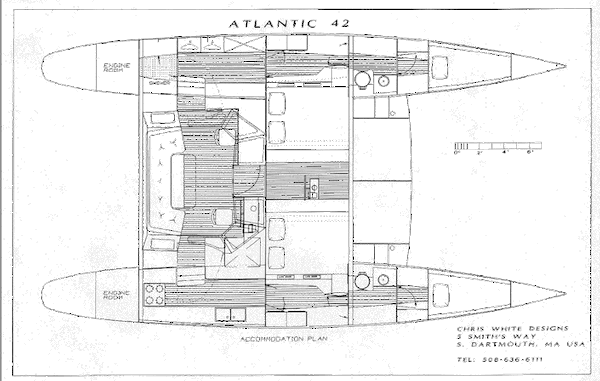
The Atlantic 42 makes clever use of its twin-hull and pilothouse layout to create a comfortable liveaboard interior. The galley is located in the hull rather than the pilothouse, giving it generous counter space and storage while maintaining an open connection to the pilothouse for communication between crew members. The forward cockpit, positioned just behind the mast between the hulls, serves as both a sailing station and a social space.
Sleeping cabins are distributed between the two hulls in the manner typical of performance cruising catamarans, allowing privacy and separation of spaces. The overall arrangement prioritizes practical offshore functionality — ease of watch-keeping, protected sail handling, and efficient use of volume — consistent with the design's focus on extended bluewater passages.
Links, References and Further Reading
Image Gallery